Case Study
Monkey Audio and Visual Media System
2020-2022
This project began by looking at ways to develop interactive technology to enrich the lives of white-faced saki monkeys. We chose monkeys after approaching the Korkeasaari Zoo and asking what animal would be suitable for technology enrichment. We began the project by scoping out the monkeys, visitors and keepers’ needs and requirements. From this, we learned that most zoo visitors focus on aesthetics and want to learn something. Zoo keepers concentrate on practicalities, such as the White-Faced Sakis technology usage to be monitored.
We searched the literature and discovered mixed results but promising reactions to audio stimuli from non-human primates. As such, we decided to build an audio device for the White-Faced Sakis.
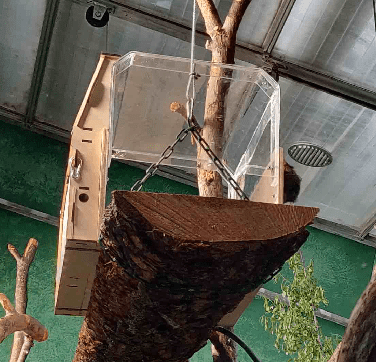
Drawing from the needs and requirements to decide on the shape, we began by testing different forms to determine the shape of the interface. These interfaces were developed at low-fidelity prototypes in wood and plastic so that the White-Faced Sakis could only hear the audio when inside or underneath. We put two interfaces, a dish and a tunnel shape, in their enclosure to explore their interactions over a few days. We found that saki monkeys would initially engage in both prototypes through biting and with their hands but quickly abandoned the dish shape. The tunnel shape, however, became a place they would often congregate and sit inside.

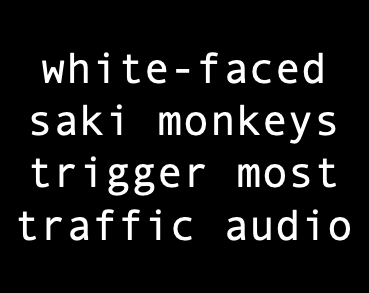
We then developed technology that would recognise when a monkey was inside and play the audio. We choose rain, zen, traffic and electronic music as these audios have varying audio spectrums. We used this system for several weeks and found that the sakis would significantly listen to traffic sounds over all other sounds and silence.
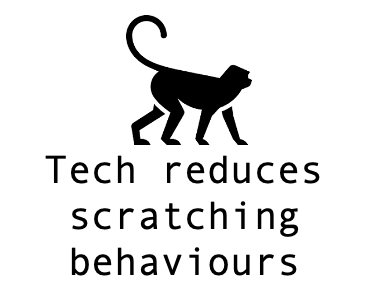
From this result, we developed the system to have a screen inside and explored how monkeys triggered a device that provided visual stimuli. Again using the system for several weeks, we found that the monkeys trigger underwater and worm videos significantly more than animal, abstract art and forest videos, and the control condition of no-stimuli. The results also indicated that the different visual stimuli conditions significantly reduced the sakis’ scratching behaviour with the visual stimuli conditions compared to the control condition.
We then prototype buttons for White-Faced Sakis to give them more choices than on/off from entering the tunnel device. We engaged with rapid prototyping with monkeys reflecting on quickly designing tangible buttons for non-human primates. We suggest monkey buttons, highlighting colour and pull/swing over push/touch interactions.
Building on our audio and visual work, we developed a system that provided a choice between both stimuli. This system recognised where the White-Faced Sakis stood inside the system, having three interactive zones triggering different audio and visual enrichment. Utilising this system over several weeks, we found that White-Faced Sakis would interact and choose between various stimuli, though not significantly, and that White-Faced Sakis triggered audio stimuli twice as much as visual stimuli. The monkeys interacted with audio and visual stimuli differently over time, spotlighting how to define and measure the interactivity and user experience for monkey–computer interfaces.
Furthermore, while initially increasing, the monkeys’ interactions declined over the study period, indicating a novelty effect. We then looked at our research with the White-Faced Sakis and published research methods for digital enrichment reflecting habituation and novelty effects.
The findings of this work build the foundation for white-faced saki digital enrichment, uncovering answers to critical questions regarding creating and defining interactive systems according to a user’s choices and what stimuli provided enrichment.
Outcomes:
– Requirement Gathering for Zoo Keepers, Zoo Visitors, and Zoo Animals
– Low Fidelity Prototyping – Rapid Prototyping Methods
– Developed Unique Interactive Systems for Non-human Primate
– Findings on Audio, Visual and Audio and Visual Enrichment Combined Stimuli Effects and Triggering Choice – Finding on Button Choice for Non-human Primates
Links
Requirement Gathering for Non-Human Primates in Zoos Publication
Prototyping and Developing Audio System for Non-Human Primates Publication
Prototyping and Building Visual Enrichment System for Non-Human Primates
Buttons for Monkeys Computer Science Design Publication
Developing Audio and Visual Enrichment System for Primates


 Animal-Computer Interaction Group